NEWS
Fair Taxes for Iowa's Future Urges No Vote on Amendment 1
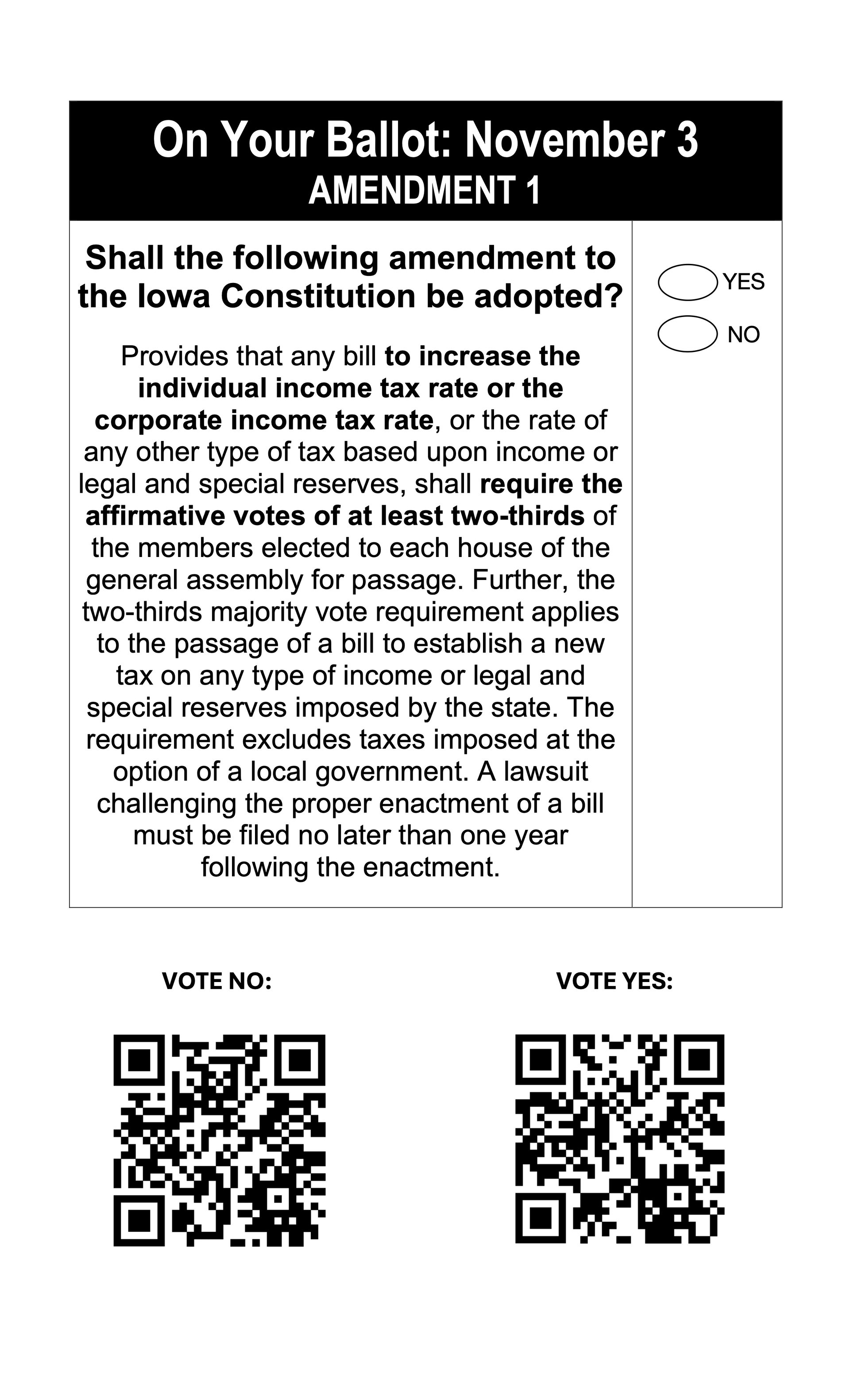
A new coalition of labor, education, and human services groups have formed the Fair Taxes for Iowa's Future Coalition. They are asking Iowans to vote "NO" on Amendment 1 on November 3.
Right now, Iowa lawmakers can raise state income taxes with a simple majority vote — that’s 51 out of 100 House members and 26 out of 50 senators. Amendment 1 would change that so any future increase in personal or business income taxes would need a two-thirds vote in both the Iowa House and Iowa Senate to pass. That means 67 of the 100 House members and 34 of the 50 senators would have to agree before income taxes could go up.
The main group backing the amendment, Iowans for Tax Relief, argues that higher income taxes should be a last resort. For that reason, they want to make it harder to raise income taxes. They say that the supermajority requirement forces Republicans and Democrats to work together.
Fair Taxes for Iowa's Future argues the opposite - that the amendment would lock in place the large tax cuts Iowa passed between 2019 and 2025, cuts they say helped wealthier families and profitable corporations the most. Supporters say that a “yes vote” would make it harder to tax the rich and force budget cuts, further harming those who benefited the least from the recent tax cuts. Supporters also challenge the main argument for the amendment (it makes it harder to pass an income tax), saying it is already very hard to do this. The last time Iowa raised income taxes was in 1974, and since that time our state has cut income taxes six times. With a simple majority vote.
What This Could Mean for Disability Programs — And What’s Uncertain
This is the part that matters most to Iowans with disabilities and their allies. Amendment 1 does not name or target any disability program. It’s about how many votes are needed to raise income taxes. No cuts or changes in funding for programs like Medicaid is included in this amendment.
That said, Iowa is already running an annual budget shortfall of more than a billion dollars. Opponents say that gap will have to be closed by either raising revenue or cutting spending, and that a two-thirds requirement makes raising revenue much harder. It also means other taxes may take the place of taxes based on how much money a company or person earns, like sales and gas taxes that hit poorer Iowans the hardest. Those opposing the bill say that leaves cuts as the more likely path. Because school funding, Medicaid, and other human services make up more than 80% of the state’s budget, there is really no other place to make those cuts.
What Happens Next
Amendment 1 needs a simple majority of “yes” votes statewide to pass. We want to make sure you know the facts and the impacts now - before you get to the voting booth. Learn more about this issue at the campaign websites and by listening to our last Capitol Chat, which featured speakers on both sides of the issue.
Bottom line for Iowans
The amendment limits what our elected legislators and Governor can do to pay their bills and make sure services are available for all that need them.
News